
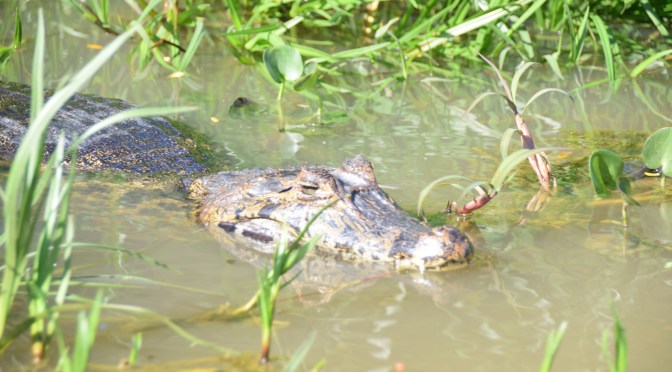
This week, I headed out on a tour of Brazil’s Pantanal region. This area is known for its wildlife, including many species of birds, capybaras, caiman, and the main reason I am here: pantera onça aka the jaguar.
The Pantanal itself is a very large region of Brazil’s interior, south of the amazon. It is known as a tropical wetlands, flooded during the rainy summer season, and full of lagoons during the dry winter (which is now). I chose to come to the northern end of the Pantanal, as there is a much higher probability of seeing jaguars. So, on Sunday, I flew up to Cuiaba, the starting point for the tour. Unfortunately, I ended up on very late flight, arriving in Cuiaba at around 2am…
A few short hours later, I was ready and waiting to be picked up from my hotel. I could have slept longer, however, as I was left waiting for an hour and a half. Not a promising start to the tour… Julia H from my days in Barranquilla ended up on the same tour by chance! She was also left waiting at the bus stop for 2 hours… We had both chosen Ecoverde, an operator that has been around for a long time, mainly for the “budget” price tag. It was still a very expensive tour, but compared to other outfitters, it was at least reasonable. Joel, the owner, means well, but I think he is becoming overwhelmed by the tasks that are required (including more prompt communication/organizing things) and that his 30 years in the business may need to come to an end.
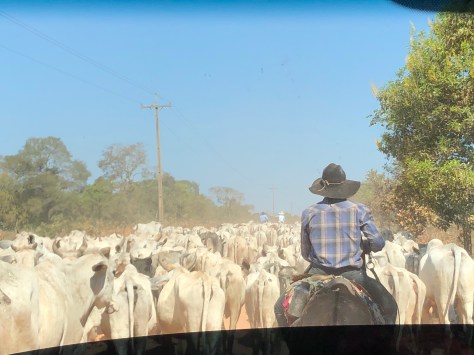
Needless to say, our late pick up meant a late departure, and we left for our first pousada around 10:30am, 2 hours behind schedule. After a stop in Poconé to purchase water, we finally hit the (dirt) road! We arrived at the Pousada Canto do Arancuã and had a late lunch before heading out on our first excursion: canoe by paddle. The name was a bit misleading, as we took a boat, but it was by paddle. (The guides paddled while we watched. We saw many many different birds (which will hopefully be featured in a later post, Birds of the Pantanal post, once I figure out all of the ones we’ve seen so far!). On our tour, besides Julia and I, we had a French family (Jean Jacques, Caroline and their children, Jules (12) and Camille (8). For being as young as they are, the family have travelled extensively through places such as Guatemala and Brazil. We were also joined by 3 “younger” girls who are currently doing their Masters in ecology (Susan, Aurelie and Louisa), and one in particular is BIG into birds (Louisa. She is sending me a list of the birds we saw). The excitement they had was a bit much for Julia and I at the beginning. It seemed initially like they had never seen wildlife (this is before I knew they were studying ecology and just truly excited by all the species around us). Along the way, we came across several egrets and herons, and we also started seeing caiman, which we were excited by. It is funny, now that we are further into our trip, caiman are in fact EVERYWHERE. You would not want to go walking anywhere at night! (Never mind the jaguars and anacondas!)
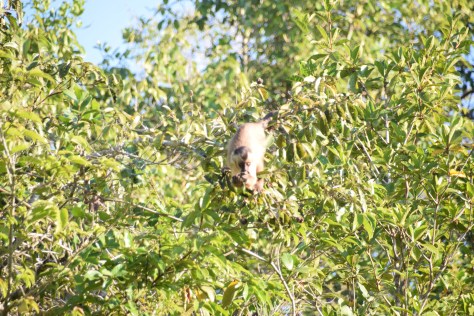

On the boat tour, we saw piranhas (that had been caught already), caiman, kingfishers, herons, chaco chacalacas (basically like hens), egrets, cormorants, a capuchin monkey and a river otter! He was adorable, busy crunching away on his fish! Back on the river bank, we got to see a gorgeous sunset. It’s funny, the trees, the grasslands and the termite mounds really reminded of Kenya. (There are tons of mounds. It kind of looks like a graveyard with termite tombstones, or otherwise, neolithic rock structures like those found in Europe.) Apparently, they are all active (that is a scary amount of termites…) and the mounds that are shorter are around 5 years old, and the taller ones (7-8 feet high) are older. What I am not sure about, is what happens to the mounds or the termites when the area floods (up to 2 metres higher than it currently is and washing out the roads, creating little fazenda (farm) islands. Do the termites migrate? Are their mounds somehow waterproofed? Are their tunnels completely washed out? So many questions for the termites!! Also, something interesting that I learned, was that the mounds are built around the trees, and basically they destroy the tree from inside the mound. Also, there are more than one type of termite here. These ones that I have described are ground termites, whereas there are also tree termites, that build the big black blobs in the trees (you know the ones that look like growths? Those).
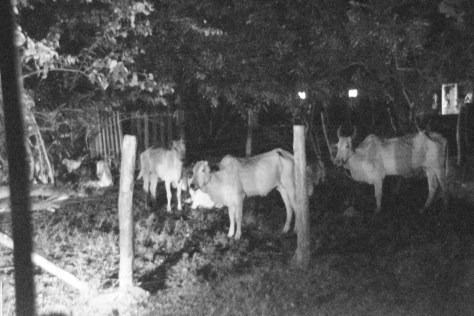
After dinner, we went on a night safari, taking an overland truck out down the “driveway” until the main highway 3 km away. There were many cows trying to block our exit (this is a working fazenda), and then there were apparently a lot of caiman in the ponds. Having been to the amazon, I was aware of what kind of red glint I was looking for as we swung the spotlight back and forth, but I could not see them. We also saw a deer, and a small anteater! He was adorable!! None of us managed to get a picture, but he had orange legs, and a striped torso. Unfortunately, we did not see any armadillos or giant anteaters 😦
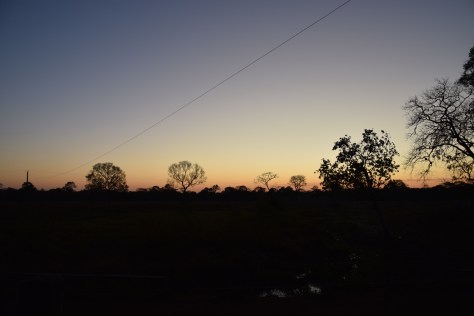
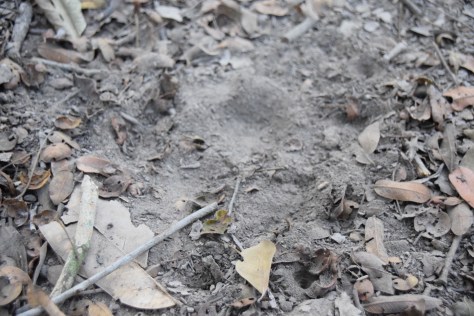
The following morning, before breakfast, we went on a nature walk. We saw some hyacinth macaws fly by in their pairs, making an awful racket. We also saw the native emus (greater rhea)! Along the trail, we found a tapir track, but we didn’t actually spot one. The sun rise was beautiful too.

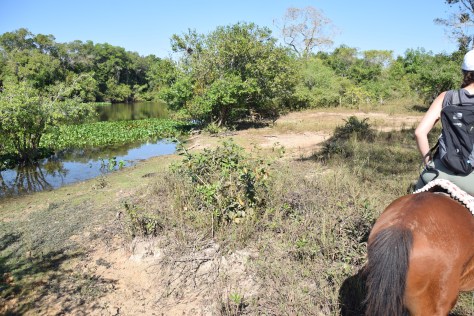
After breakfast (typical Brazilian style with lots of cakes), I headed out on horseback to explore the area. Louisa and I are both allergic to horses, and she has only ridden a horse once before. Aurelie grew up riding, and was very comfortable, even wanting to gallop. Most of our ride was uneventful, we walked through brush, came across caiman by the river, and our guide spotted a tapir, although we were too loud and it was gone before the rest of us could get to that spot. We also saw a beautiful large green hummingbird (again, no picture as it flew away too quickly). On the way back, my horse was chomping at the bit, hoping I would loosen up the reins a bit so he could run. Aurelie was galloping her horse a bit, and when Susan’s horse started, mine followed suit. A gallop is definitely more comfortable than a trot, until I felt like I was starting to fall off. Luckily, I still had control of my horse. In the end, we all made it back safely, and were able to go for a swim in the pool before lunch.

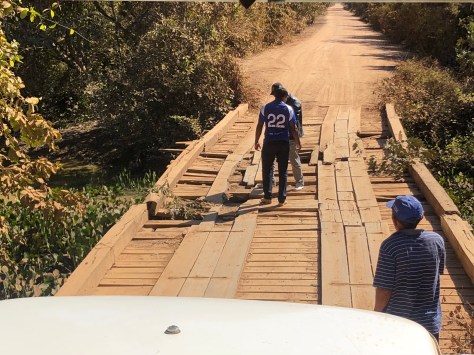
After lunch, we packed up our overland vehicule for a dusty and bumpy 125km journey down the Rodoviaria Pantanal to its terminus, Porto Jofre. It took a very long time to get there. Along the way, we spotted many a caiman (they literally are littering the waterways), giant river otters and capybaras. We also saw the large Marsh deer (3 of them, but they were too far away for pictures). We also drove over some sketchy bridges… (I counted on the way back, 106 total, 80 of which are wooden).


Porto Jofre
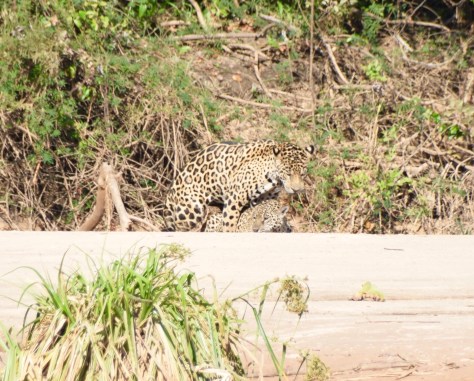
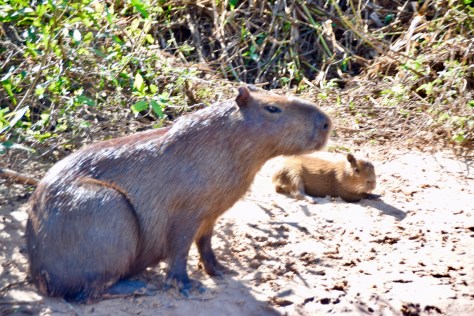
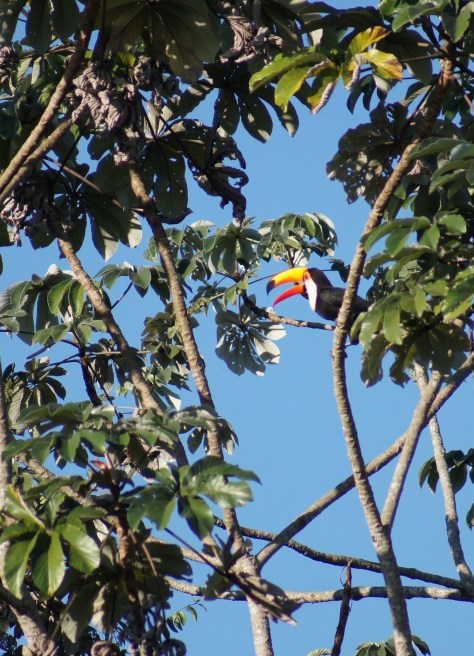
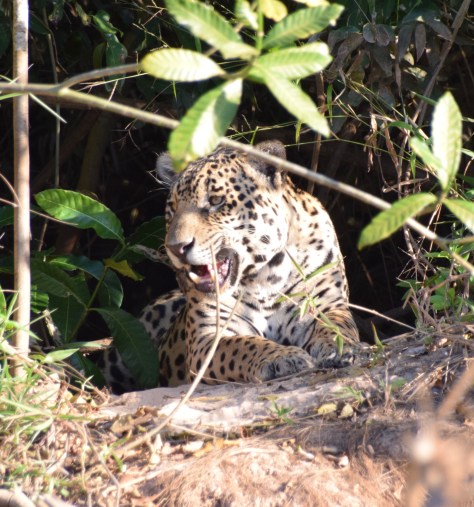
Our time at Porto Jofre was spent the same way both days: breakfast at 6am, followed by a boat ride from 7-11am, lunch at 12, then another boat ride from 2-5(ish)pm and dinner at 7. The main goal of this was to spot jaguars. We were very lucky, and we saw 7 jaguars over the course of 2 days. Like always, we saw a couple of families of river otters, capybaras (including one that had bite marks on its back), many birds (various herons, cormorants, egrets, parakeets, hawks and even 1 toucan!). This was in addition to the numerous caiman. Back at the pousada, we were treated to macaws and caracaras. But most of all, let me reiterate: we saw 7 jaguars!!! I’m so happy about that!!
Day 1: Jaguars 1&2 were mating on a sand bar, jaguar 3 (fem) had likely been hunting in the water, as she was wet. You also should have seen how quickly the caiman moved when she got to the edge of the ridge! Huge splashes of water!


On the way back to camp, we saw a toucan and many capybaras.
On day 2, we saw 4 more jaguars 2 female and 2 male.



And that brings me to the end. I have so many more pictures, but I will post them elsewhere!
Tchau for now!
 Curious Julie's Colourful Adventures
