

I will be the first to admit that when a trip opportunity came up to visit Kurdistan over the American Thanksgiving weekend, I was filled with both excitement and a bit of trepidation. Travelling to the autonomous state in northern Iraq is not most people’s idea of a long weekend getaway! But I am a curious person, and was driven by the intrigue of visiting a country that has been in the news for years as a war zone (well… I wasn’t actually visiting the war zone, but still…). It was surreal to see the beauty of the Erbil region, knowing t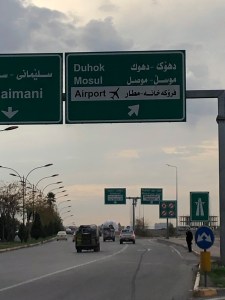 hat its neighbour, Mosul, only 87 km away (or approximately 80 minutes drive + checkpoints) is a war ravaged area. Our guide for the weekend, Sabah, works for the British Consulate in Erbil, and has travelled to Mosul, so he shared his experience and photos with us. They had to go in a convoy of 5 armoured cars, wearing full body protection the entire time. The sights you see on the news are what exist, with buildings in ruins, and bodies littering the streets. (The only thing littering the highways/streets in Erbil state was the rubbish (especially plastic). Even though they were travelling from Kurdistan (part of Iraq), and going for diplomatic reasons, they were stopped at many different checkpoints and questioned, as the Kurdish and the Arab Iraqis do not like each other. Sabah very much emphasized the fact that they are different from the Arabic Iraqis, even if they are Muslims (Sunni). (Perception Challenge, especially for my friends who are bombarded by North American News broadcasts… Islam, just like Christianity, has many different denominations, and just because someone is Muslim does not make them the same as the extremists in the news.)


Arriving in Erbil
As this is not your average tourist destination, I went with a group called Trekkup Dubai, who organized the whole tour for us. We left Dubai on Thursday morning and took the direct flight with FlyDubai. It was a smooth (and empty) flight on the way there. We pretty much each had a row to ourselves (there were 11 of us in our group flying from Dubai). Once we landed, I could feel the butterflies in my chest fluttering around, with the anticipation reaching its heights at the passport control desk, where I eagerly awaited my stamp to say that I could enter the country! (As a Canadian, my passport is among a group of Western countries that are allowed free entry into Iraq. Perception challenge: Americans are allowed to visit Kurdistan, with Visa on Arrival. The American in our group had no trouble at all). Technically, it is called a Visa on Arrival, however, you do not have to fill in a special paper, or pay any money, just scan your fingerprint and have your picture taken. (**It is important to note that although the stamp shows the Republic of Iraq, this visa is ONLY valid in Kurdistan, and does not allow you to travel outside of the Kurdish region). Once through, we got to experience some of the safety measures put in place at the Erbil International Airport. As vehicles are not allowed to come up to the main terminal, we had to catch the shuttle bus to the “Meet and Greet” area a few kilometres away. We also learned later, that there are 4 army contingents situated around the airport, US, German, British and Kurdish (I think). Now doesn’t that make you feel safe!
Erbil City Tour
We dropped our stuff off at our hotel (Hotel Seever) and headed out on a sight-seeing tour of the capital city of the region. The city has around 850,000 people, and in the Kurdish language, is referred to as Hewler/Hawler. (We didn’t actually know this at the beginning, and were quite confused as to why so many gas stations and stores were called Hawler!). This city has a long history, dating well back (at least 6000-8000 years). It has been part of many different “empires”, including the Sumerian, the Assyrian, possibly the Persian, and the Ottoman empire.
We began with a newer site, the mosque, Jalil Khayat (جامع جليل الخياط). This mosque was completed 10 years ago, and was designed by its namesake, Jalil Khayat, who passed away during the construction. It is an impressive sight, especially inside. It is the largest mosque in Kurdistan and filled with carpets from Saudi Arabia. One thing that surprised us is that the interior is painted, not mosaic tile as we first thought! It was also really interesting to be inside the mosque when the Call to Prayer started.


Continuing on, we drove back to the “Historical Centre” of Erbil, and visited the Citadel. The Erbil Citadel is situated at the top of a steep hill, and until recently, was inhabited Kurdish residents. Now, it is a UNESCO World Heritage site. The citadel itself has been in existence continuously for about 6000 years. The exterior wall is made up of the exterior walls of the old houses. Seeing it from the bottom of the hill gives quite an impression!


After climbing the hill, we passed through one of the main archways into the main street running through the citadel. Upon looking at a map, we realized that the citadel is MUCH larger than one would think. There are many narrow streets, leading to houses. They are preserving some of the places, as it is a Heritage site, so you can see what it would have looked like. As is the case in many places in this part of the world, the traditional houses were built up with walls all along the exterior, with an interior courtyard for the family to use, as opposed to the North American style of Front/Backyards.


Other notable buildings within the citadel are the mosque and hammam (bath house). There has been a mosque in this location for around 1000 years, making it the oldest mosque in Erbil. Right next to it is the bath house, or hammam. Originally, the hammam was open to men 6 days/week, and women 1 day/week, however, later on (approximately 100 years ago), it was changed to women in the morning and men in the afternoon. The hammam remained in use until around 2005. Ahmed pulled some strings, and one of the guards opened up the hammam for us to visit (it is normally off limits to everyone now). Inside, we saw the labyrinth of rooms, including “private” elite cubicles, as well as the main rooms which could bathe 5-7 people or so. They even have a jacuzzi, although the entrance into it is a bit claustrophobic! Outside, underneath the jacuzzi, you can see the space where an outdoor fire would be lit to heat the water inside. Another interesting piece that was pointed out to us was that this was a non-discriminating place, with symbols of Islam, Judaism and Christianity decorating the walls inside. The water that was used to bathe with came from a well that is about 50-60 m deep. Another interesting side note, is that, even though the hammam has been closed up, and the walls are very thick, it didn’t particularly smell bad.


Nowadays, no one lives inside the citadel anymore, but they do have a few different museums and antiques stores. We visited the Textile Museum, where we saw many different traditional rugs, some traditional clothing, including skull caps and tribal wear, and an example of how the tent would have been set up, with reed walls held together with wool woven into intricate patterns. Something that I found fascinating is the similarities of the patterns in their weaving here to those of South America. (This could help support the theory that humanity began in one location and moved its way outwards…).


Leaving the citadel on the opposite end, we came out onto the Main Square and Central Market. Time for a bit of shopping and shay (tea). We wandered through the narrow alleys of the souk and ended up at Cafe MAM Khalil, a small hole in the wall. As we noticed later on, these tea shops are definitely the place to be for men. This particular one had a lot of charm, with pictures of the visitors and patrons adorning their walls. Tea here is a BIG deal, and is served black, piping hot and with some lemon and lots of sugar. 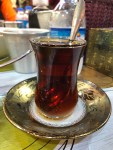 It is served in adorable little cups, and you can continue to have refills. As this was included in our tour, I am not exactly sure how much it costs, but I think we saw that it was somewhere around 20-50 cents? The only downside of these cute little places (and most places in Kurdistan), is the smoke. There are no laws about smoking indoors, even in the hotel lobby!
  After exploring the souk a bit more, we went back to some rug/carpet shops, and I ended up buying a beautiful rug for under 15$ USD (15000 dinar). It is handwoven, and made of thick wool. I didn’t know it at the time, but Sabah informed me that it is likely 40-50 years old. Even though we are tourists, Sabah and Ahmed made sure that we were getting a fair price, so I know that I wouldn’t have been able to get it cheaper. When I bought it, I wasn’t sure where I was going to put it, and it was larger than I was planning to get, but it works very well in my front entrance!
Leaving the market (we will be back in the Main Square for dinner), we headed out quickly to Minare Park, to visit it before sunset (at around 5:15pm). It is named after the minaret that is standing in the park, which was built in 13th century and has a dual spiral staircase, so that those ascending and descending didn’t run into each other. There are also famous Kurdish people (authors/musicians/artists/politicians) lining the walkway towards the minaret. As we discovered later on that weekend, they really enjoy their carnival rides, with a hot air balloon, and a skyride that connects you to the neighbouring park!


Before returning to the main square, we stopped at Ankawa, or the Christian district, where you basically feel like you are pulling into Vegas! As soon as we entered, all you see is “off-licences” and advertisements for alcohol! I guess this is also the area that has most of the bars and nightclubs. We bought some wine for the mountains (the following night), and then went to visit 2 churches, one new and one old.


The first church was St. Youssef, which is only 38 years old. It is not super fancy, but was decorated very nicely, as we basically were crashing a wedding! (Our guides definitely pulled the “foreigner” card, allowing us to visit while only a few family members were there, and before the bride or groom showed up . (It was a little weird to me that they were getting married on a Thursday, but we were told this is typical, and the party will continue until Friday night). The shops for wedding dresses in Ankawa show that they love their dresses big!

Visiting the church challenged yet another belief/perception: that Arabic does not equal Islam. I found myself struggling to reprogram my brain, as I generally associate the Arabic language with Islam. However, it was an important reminder that language and religion are not the same. There are Arabic Christians, as there are English Muslims etc. This idea was reinforced when we visited the second church, which is the oldest in Erbil. The thing I really noticed was that wall were very thick, and built of stone. Many of us on the trip (especially the Irish) also really enjoyed seeing all the Christmas decorations everywhere!
It was finally time for dinner, and as we sat outside, Sabah, Ahmed and our driver got quite a kick of us all bundled up and still freezing! We may be “westerners”, but we all live in the UAE, and 10 celsius is REALLY cold! The poor kebab shop owners felt bad for us, so they set up tents around us frozen souls! We must have been quite a sight to all the locals. As mentioned, we had kebabs for dinner, and I was introduced to sumac, a spice that is red with a lemony/citrus taste. It reminded me of tamarind, although I have discovered that it is a different thing.


After dinner, we warmed up in another Shay (chai) shop, where we were the only females. As a mixed group, it was very obvious that outside of the souk, you do not see many women. We got to speak to a few locals who have very good English, and I enjoyed watching everyone play backgammon. Armenia has chess, and Kurdistan has backgammon. It was definitely a cool experience, despite all the smoke. Outside, we were treated to some seeds that were being roasted with what looked like a blow torch. From there, we dropped a few of our members off at the hotel before heading out to a bar. We were originally supposed to go to a roof-top nightclub, however, with the downpour that we experienced (thankfully the thunderstorm held off until we were done dinner!), there is no way we would have enjoyed being outside!! Never mind the fact that I was in the same clothes that I left Dubai in, and did not feel anywhere near nice enough to go to a club! At the bar, there were a few other expats, and I got to see Kizomba for the first time. It is a gorgeous, sensual dance! The Russian girl that I was talking to invited all of us to join their dance class (they live in Erbil), but as we are only visitors, we had to decline.
Into the Mountains
On Friday morning, we headed out Northeast towards the Zagros mountain range. On the way out, we passed the site of the new American consulate (which will be the largest in the world and is scheduled to open in 2021), as well as the British and Russian embassies. I also find it really interesting that many of the communities are named for the countries that the architects were from! We passed the Russian village, Swedish village, Italian City 1 and 2, and the American city. As we drove out of the city, we passed through several checkpoints, including one where our Dubai leader, Vanessa, had to show her passport. They are very serious about security here, and with the history they 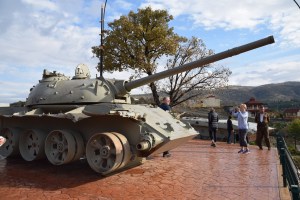 have had, it’s no surprise. We are driving on the land where the Kurdish Army, the Peshmerga, have fought against many, including to hold back Saddam Hussein (by law, the Iraqi Army are forbidden from entering Kurdistan). We drove through Salahaddin, where the current President has his house. This used to be Saddam’s house, and we stopped at a site (Sheraswar monument) where there are tanks sitting from previous conflict, as a war memorial (and commemorating the strength of the Kurdish Army).
On the political side, there are many things happening in Kurdistan. There are issues with receiving all of their oil revenues, and the President (who has been serving for 27 years) held a referendum last year to try and gain independence from Iraq, even though other western countries did not advise it yet. Unfortunately, this incited Iran and Turkey to fight back. At one point, Syria would likely have joined in the fight, however, they currently have too many internal issues to deal with. With help from the Germans, the Kurds successfully fought back their opponents. In a show of “mending fences”, shortly before we arrived, the Kurdish President went to Baghdad for the first time (this is a big deal here).


We continued on to a couple of waterfalls (I don’t remember the name of the first one, but the second is Bekhal falls) and basically had the place to ourselves, as it’s off-season. This is actually a very happening spot in the summertime for tourists, akin to Cottage Country in Northern Ontario. We stopped for lunch at the foot of the Korek Ski resort, looking into the valley in one direction, and the gondola disappearing into the clouds in the other direction. After more kebabs, we headed to the town of Rwandz (rawanduz) for our hike. It was muddy, but the rain held off while we were hiking. In the summertime, they offer to stop and let us swim, but it was much too cold, and the currents too strong for that. The hike started off well, until our path was washed out by a mudslide. The 3 Kurdish men who had passed us had no problems continuing, however, when one of our members started sliding in the mud, we made the smart decision to turn around. Thankfully, the shop across the street from the starting point of the hike gave us a hose to wash off with! (He also let us use his toilets, which are like all of the toilets here: squatties).


With our near miss, we headed for a chill evening in our lodge accommodation at the Pank resort. Along the way, we tried the Rwandz wine, which is a local brew (fortified wine, much like sherry). We also got to see everyone at the resort dressed up for a wedding. There was lots of sparkles and gold, and some very ghostly/ghastly makeup… Some shades of white are not human… On our walk to dinner, we walked through a shutdown amusement park. It is rather creepy in the shadows!! It was a nice (chilly) relaxing evening, and everyone slept well.


On our last morning in Kurdistan, the sun came out to wish us off with blue skies. It was really pretty to see the snow on some of the mountains (like home). I found out that it tends to snow in the mountainous regions in December/January, but the lower lying areas, such as Erbil do not see snow. From our lodge, you can see a far distance, including an observatory that was build under Saddam Hussein, and a bunch of sheep roaming the fields. As we drove back to Erbil, we stopped at a town called Shaqlawa, where we went to the Christian Cave. We were told it was a 45 minute hike, but what they neglected to tell us is that it was straight up… I am not in shape for this right now! It was reasonable on the way up to the “bottom”. Then it was pretty much just switchbacks scaling the mountain. The Christian cave is used by both Christians and Muslims to come and pray. The story is that a priest who was run out of town hid up here in the caves, and eventually died there. Now people make the trek to pray, and also to use one of the rocks in the cave that is said to impregnate a woman if she slides down it. None of us in the group decided to risk it. Although the climb was rough, the views from the cave were gorgeous, looking out with the blue sky and red dirt. I guess you could say it was worth it!


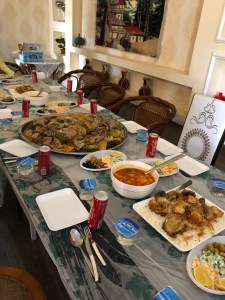
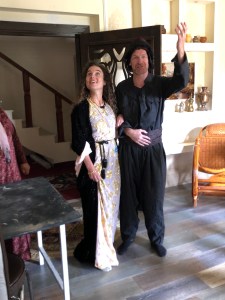
Our last stop before returning to the airport was at Sabah’s sister-in-law’s house. He and his wife have bought the house neighbouring, but there was an issue with the contractor, and the house is not finished/livable. We met his wife and children, along with her mother, sister and brothers. They prepared a feast for us, and it was definitely the best food we had! The dolma (stuffed veggies) was made with eggplant, zucchini, grape leaves, and served with rice, lamb, chicken and soups. They do not let you go hungry in this country! Most of us had 2 or 3 helpings, and it still looked like we had barely eaten anything. (The platter for just the dolma had to have at least a 3 ft diameter). Then we enjoyed pictures with the families, and they dressed one of the couples up in the traditional wedding clothes.
As much as we would like to have stayed, it was time to go to the airport. Once again, I will reiterate how important security is to them here! You cannot access the main terminal directly, so, when you arrive at the airport, you must first go through a security checkpoint where everyone is taken out of the vehicle and patted down (men beside the car, and women in a private cubicle). While one guard is patting you down, another brings a sniffer dog onto the bus (or around your car). Once you receive the all-clear, you pass to the “Meet and Greet” area, which is it’s own stand-alone building. Your bags and yourself go through security again, where some of us lucky ones (myself included) got a second pat down. Then you board the bus that will take you the 1-2 km to the actual terminal. You once again go through security, then you can check in, go through passport control, and before finally getting to your gate, you must pass one more security checkpoint! Thankfully I checked my bag, so I didn’t lose my honey that I had bought.

And as all trips seem to go, our plane was delayed, getting us back to Dubai quite late (around midnight). I felt bad for the Abu Dhabi contingent, as they still had to drive back after. It was a whirlwind trip, but I am so glad that I went! The people are very friendly, the countryside is beautiful, it is safe, the roads are paved and in good condition, and it’s even a tourist destination in the summer! I do think that if you are in this region, you should try to visit, although definitely get someone to guide you around, as you will need to be able to communicate in Kurdish.
See you soon after my safari to South Africa, Botswana and Zimbabwe!
 Curious Julie's Colourful Adventures