
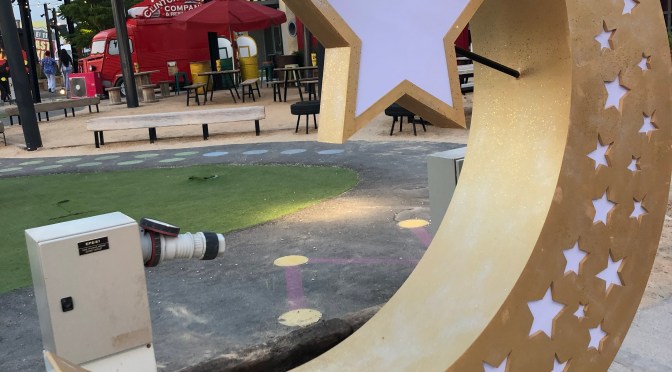
As the new moon approaches, you can feel the anticipation as Muslims around the world are preparing for Ramadan, the ninth month in the Islamic calendar. (Update: as I finish writing this post, the crescent moon was spotted and confirmed both by Saudi Arabia and the UAE. It has happened before that the countries will call the month or holidays differently, as in the Middle East, the moon still needs to be physically spotted).
The Islamic calendar is a lunar calendar, with 11 months. Each new month begins with the first sighting of the crescent moon after the new moon. When you think about it, measuring the passing of time using the lunar calendar makes a lot of sense, as the moon continues to repeat its cycle consistently. (I mean, scientifically, I understand why the year in the Julian calendar is 365 days, as it takes 364.25 days to orbit the sun, but still, having 12 months of differing lengths isn’t the most intuitive!)
You may be asking yourself why this month is so special? I will be the first to admit that I knew very little about Ramadan before moving to the Middle East, other than that it was when Muslims fasted from sunrise to sunset. Now that I am here, and have the advantage of an Islamic Studies department in the school who can inform us about different traditions and customs, I thought that I would share what I have learned with you.
Some of the things I have learned are that it was during Ramadan that the Holy Qu’ran was first revealed to the Prophet Mohammed (PBUH). It is a time when Muslims concentrate on their faith, charitable acts and acts of worship and reflection with the aim of purifying their souls. Fasting is part of this purification process, as is abstinence from other sinful acts (such as aggressive behaviour, cursing, wearing inappropriate/immodest clothing) from sunrise to sunset. The benefits include the “release” of the earthly temptations and distractions, empathizing with their fellow citizens who are less fortunate and may not have food, and to remind people to be charitable to others. (Basically, allowing them to refocus spiritually and re-orient their moral compass if needed). In that way, it is similar to Lent, in the Christian tradition.
Some other interesting facts that I have learned are that not everyone is required to fast, although if you are unable to, you are supposed to “make up” for it after Ramadan, by feeding others, or fasting at another time if possible. It is only an expectation of healthy adults to fast, although many in our school community begin to fast around the ages of 12-14 (when puberty hits). This means that almost half of my students could be fasting some or all of the days (when I counted, it was 45/100). (Generally, in grade 6, the students try fasting for a couple of days a week, but are not often expected to fast the entire time.) In addition to children, others who are not expected to fast, pregnant women, women who are breastfeeding, women who are menstruating, those with chronic illness or a disease that prohibits them from fasting (such as diabetes), the elderly and travellers. (Again, they are expected to make it up in some way, either by fasting at another time, or by feeding someone in need).
What this means for us at school, is that in the classrooms and common areas, we are not to have food or drink visible, although the cafeteria is still open for students who are not fasting. Generally speaking, in the UAE, you should refrain from eating or drinking in public (this includes chewing gum), although in the past few years, more restaurants are opening, with curtains drawn or dividers so that it is not visible to the general public. So if you decide to visit during Ramadan, you will not be left hungry. (This is not the case in all countries though, as more conservative ones may still have restaurants closed during the day). One other thing that I hadn’t realized last year, was that this includes eating or drinking in your car (unless you have the crazy tinted windows).
To break the fast, Iftar is celebrated, traditionally with family, or in Dubai style at almost every single hotel or large venue. You can have everything from basic to lavish here. Last year, I attended one iftar, and I plan to go to another this year. I may even try fasting (food only, I will still drink water) on that day, so that I can experience what it is like. (Many of our non-Muslim students will also try fasting, so they can know what their classmates are feeling). If you are an early morning person, you can also try a Suhoor, or the breakfast, which is served around 3 am, and must be completed before the first light of day. You can also order delivery at any time of day. (If you happen to order right around sunset, be prepared to offer water to the driver, who may have been fasting all day in the heat (it is now 35-40 C as our daytime highs).
We also benefit from shortened days, as many Muslims will be saying extra prayers and spending more time with family. (I learned that many of them will read the entire Qu’ran over the course of the month). Instead of the regular school day of 7:40 – 3:00 pm (for students) (7:25-3:25 for staff), our school days are condensed to 8-1(students) and 7:30-1:30 for staff. That being said, students are still expected to attend and participate in classes (although may be excused from PE depending on the circumstances). For the non-school folk, some businesses also run Ramadan timings, and many stores and restaurants will open later.
As I mentioned in the title, regardless of religion, in the UAE, Ramadan is a time to reflect on our year, and to make changes for the better. Whether you simply relax and take a step back from the fast pace of Dubai, or sign up for extra classes, it is an excellent time to try something new. Last year, I took advantage of this time to take a beginners Arabic class. This year, I am focusing on my mental, physical and emotional health, as I have been struggling with stress this year. I have my intention set, and will be working towards it over the next 30 days, through exercise, healthier eating and meditation.
I hope you have learned something from this post! I realize it is not my normal trip post, but still something that I thought would be worthwhile sharing. If you happen to be in the Middle East, don’t be afraid to greet somebody with Ramadan Mubarak, or in the UAE, Ramadan Kareem (which roughly translates to Ramadan wishes or Ramadan blessings).
Ramadan Kareem!
 Curious Julie's Colourful Adventures